
The Red Carpet Treatment: Everything You Need to Know About Airtel’s Shift to “Priority Postpaid”
The 5G express lane is here.

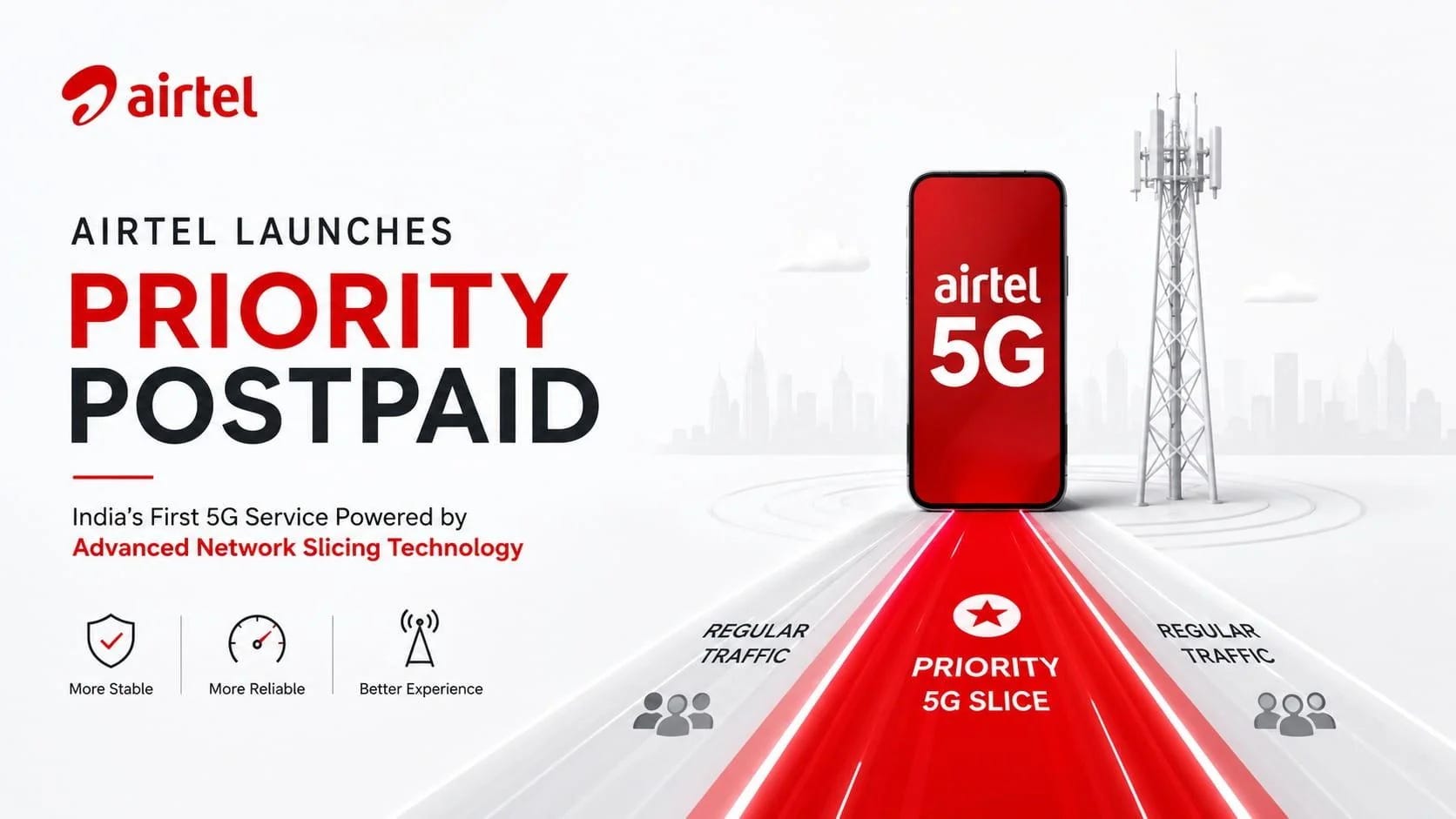
If you’ve glanced at the top corner of your smartphone recently and noticed the word “Priority” sitting right next to your Airtel network name, you aren’t alone. Telecom giant Airtel has officially rebranded its postpaid vertical as Airtel Priority, bringing a major structural update to how mobile data and customer support are delivered in India.
The move has generated massive buzz across tech forums and communities, with users noticing immediate changes in their connectivity, app dashboards, and even network statuses. So, what exactly is Airtel Priority, how does it work, and what does it mean for everyday users? Let’s dive in.
What is Airtel Priority?
Airtel Priority is the telecom operator’s rebranded, premium tier for its postpaid customer base. Recognizing that postpaid subscribers bring in higher, steady monthly average revenue per user (ARPU), Airtel is shifting away from treating prepaid and postpaid users under the exact same technical umbrella. By introducing “Priority,” postpaid users are actively given a VIP fast-lane across both data networks and customer care channels.
The Secret Sauce: 5G Network Slicing Goes Mainstream
The biggest technological shift driving Airtel Priority is the implementation of 5G Standalone (SA) Network Slicing.
In simple terms, think of the network as a massive highway. During peak office hours or in crowded urban areas, this highway gets congested with thousands of prepaid and postpaid users trying to stream, browse, or trade simultaneously.
With 5G Network Slicing, Airtel physically carves out a dedicated, virtual “express lane” exclusively for Priority Postpaid users.
The Benefit: Even if an office cluster or stadium is heavily congested, Priority users experience significantly lower ping (latency) and more stable, reliable speeds.
Who it helps: This is an absolute game-changer for day-traders dealing with quick entries/exits (FnO trades), mobile gamers, and remote corporate workers who cannot afford sudden drop-offs or network timeout errors.
The Fine Print: Data Caps on “Unlimited” Priority
With great priority comes a hidden caveat. Many users migrating to or checking their Airtel Priority accounts have noticed an explicit cap on what was previously marketed as “unlimited” data.
Airtel’s fair usage policy (FUP) for the Priority Unlimited 5G tier enforces a strict limit—typically capped at 300 GB per month. Once a user crosses the 300 GB commercial usage threshold within their 30-day cycle, speeds drastically throttle down to a crawl (around 80 Kbps), requiring the purchase of data add-on packs to restore high-speed functionality. For heavy downloaders using their 5G hotspots as primary home internet setups, keeping an eye on this 300 GB meter is now crucial.
Customer Support Fast-Tracking
The priority treatment isn’t just restricted to network towers; it extends heavily into customer care. Airtel has long reserved expedited routing for its high-value customers, but under the Priority banner, this is being formalized:
Instant Support: Priority users dialing the standard helpline (121 for queries or 198 for complaints) get fast-tracked past traditional automated IVR loops to reach human agents quicker.
App Enhancements: The Airtel Thanks app explicitly badges eligible users as “Priority,” unlocking instant live chat executives and quicker digital troubleshooting workflows.
“My Device Says Incompatible”—The Compatibility Catch
A frequent point of discussion among tech enthusiasts has been device compatibility. Even if you pay for an eligible postpaid plan, the Airtel Thanks app may occasionally flag your device as “incompatible with Airtel Priority.”
This often comes down to regional variants and network bands. For instance, users with foreign-market smartphone variants (such as US versions of flagship Samsung or iPhone models) might find that while their phone seamlessly connects to standard Indian 5G bands, it doesn’t support the specific Standalone (SA) network slicing configurations or software patches pushed by Indian carriers to unlock the “Priority” provisioning. If you are facing this, a carrier settings update or cross-checking your phone’s SA 5G band support is the best place to start.
Final Thoughts: Is it Worth It?
Airtel Priority is a clear indicator of where the telecom landscape is moving: segmenting users to monetize premium network stability.
If you are a prepaid user satisfied with your daily data limits and standard speeds, making the jump to a more expensive postpaid commitment might not be necessary. However, if your livelihood depends on rock-solid internet reliability in dense urban centers, minimal latency, and fast-tracked customer service, Airtel’s new Priority lane might just be worth the price of admission.