
The E20 Illusion: Is India’s Ethanol Push About the Planet, or the Pocketbook?
The government sells it as a green revolution. The balance sheet tells a completely different story.

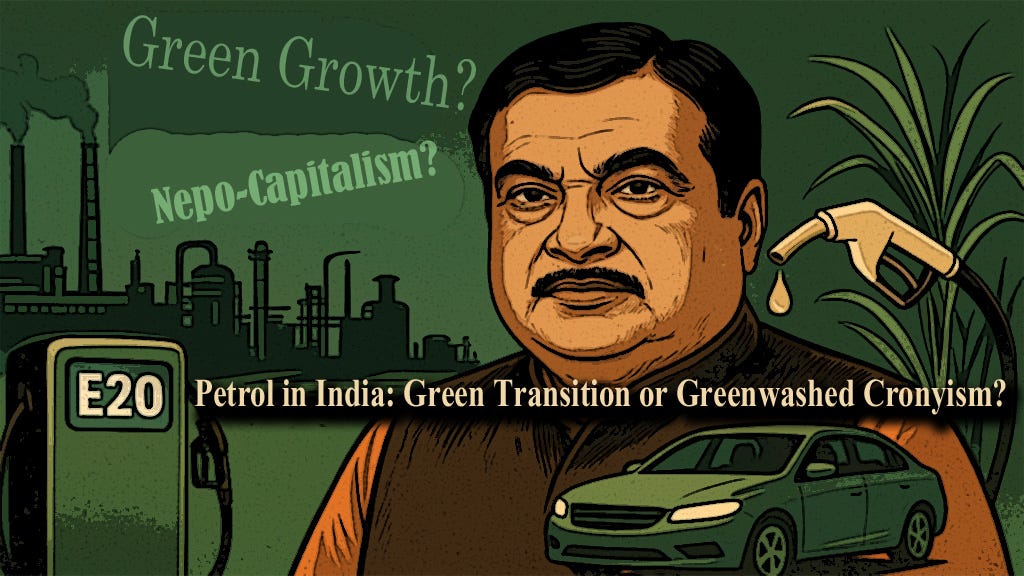
If you have pulled up to a petrol pump in India recently, you might have noticed a small sticker on the fuel dispenser or your vehicle’s tank caps: ‘E20’ or ‘Upto E20’ .
By April 2026, the nationwide rollout of E20 petrol blended with 20% ethanol is effectively complete. The official narrative surrounding this milestone has been bathed in a green glow. We are told that burning alcohol brewed from sugarcane and broken rice is a massive win for the environment, slashing tailpipe emissions and putting India on the fast track to its Net-Zero goals.
But a trending sentiment over social media on Internet asks the silent question out loud: Is India’s ethanol policy really about the environment, or something else?
If you follow the money, the answer becomes glaringly obvious. The green benefits are nice, but the real driving force behind the E20 mandate isn’t ecological. It’s a masterclass in macroeconomic survival and rural political engineering.
1. The Real Enemy: The $100$ Billion Forex Drain
Let’s be brutally honest: India doesn’t have an emissions problem that ethanol can magically fix on its own; India has a crude oil dependency problem.
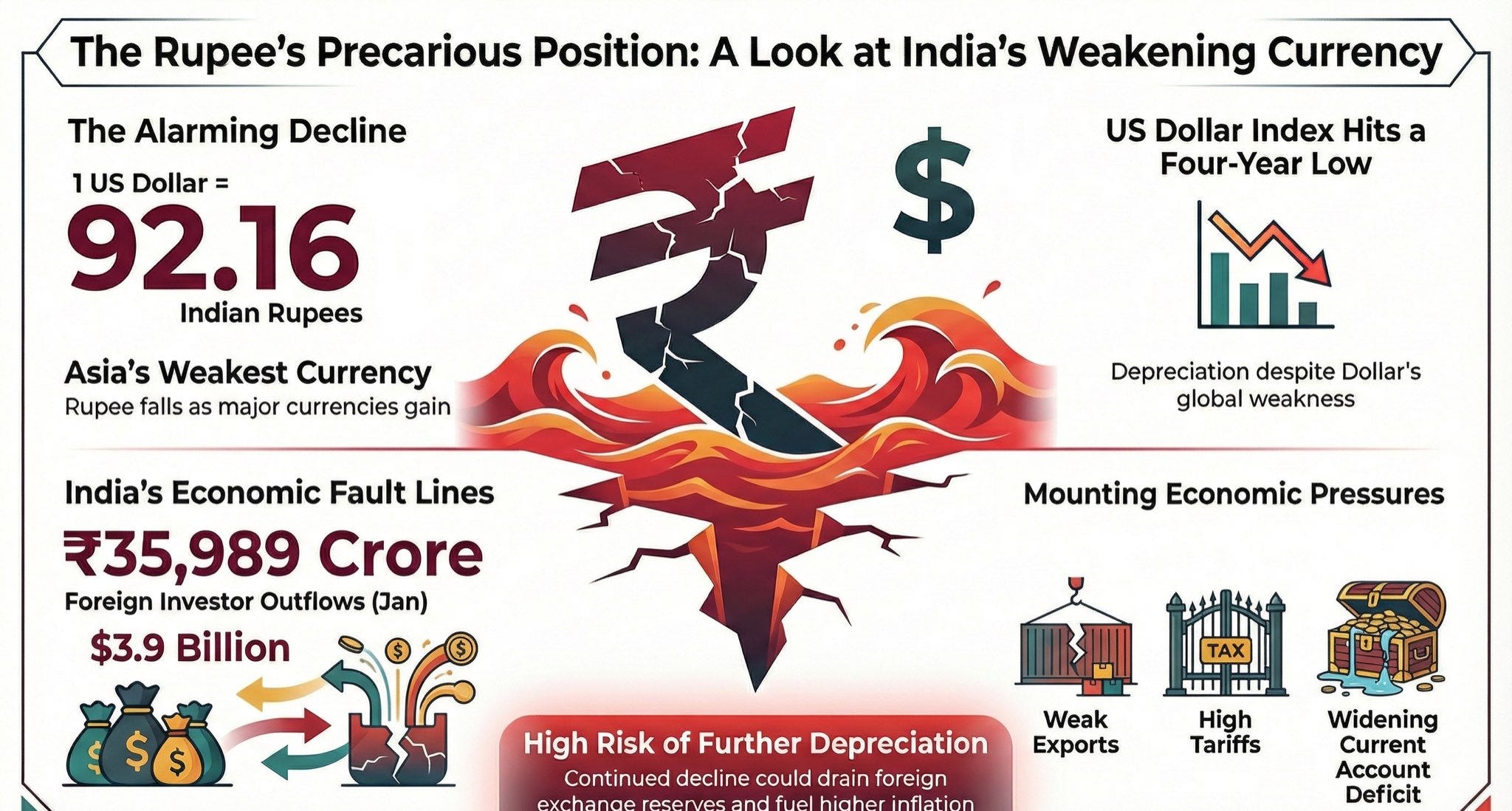
India imports over 85% of its crude oil. Every time geopolitical tensions flare up in the Middle East or OPEC decides to choke supply, India’s current account deficit balloons, the Rupee takes a hit, and inflation creeps into every household.
The Ethanol Blending Programme (EBP) is, first and foremost, an import-substitution strategy. According to data from the Ministry of Petroleum, the ethanol push has saved India over ₹1.4 lakh crore ($17+ billion USD) in foreign exchange by displacing imported fossil fuels with domestic agricultural alcohol.
When NITI Aayog accelerated the E20 deadline from 2030 to 2025–2026, they weren’t looking at carbon curves, they were looking at dollar outflows.
2. The Sugar Lobby and the Rural Ballot Box
The second pillar of the “something else” is pure domestic economics. India is frequently cursed with a problem of abundance specifically, structural overproduction of sugar.
When sugar mills produce too much, prices crash. Mills can’t pay sugarcane farmers their Fair and Remunerative Prices (FRP), dues accumulate, and rural anger boils over. In an economy where the rural vote dictates political fortunes, this is a crisis.
By mandating that Oil Marketing Companies (OMCs) buy billions of liters of ethanol at government-fixed, highly remunerative prices, the state created a synthetic floor for the agricultural market. Since 2014, the ethanol program has funneled more than ₹1.58 lakh crore directly into the pockets of the farming community.
Ethanol didn’t solve an environmental crisis; it solved an agricultural supply-glut crisis.
3. The “Food vs. Fuel” Blindspot
If E20 were purely an environmental policy, we would be talking a lot more about its ecological counter-effects.
Sugarcane and rice are notoriously water-intensive crops. In a country facing severe groundwater depletion, using billions of liters of water to grow crops just to burn them in internal combustion engines is an environmental paradox.
Furthermore, as climate fluctuations like El Niño tighten sugar supplies, the government has aggressively pivoted toward grain-based ethanol (maize and broken rice). In fact, grain-based feedstock now accounts for over 50% of India’s ethanol. This has triggered a massive supply crunch in the poultry and cattle-feed sectors, driving maize prices up and turning India from a net exporter of maize into an importer.
When you start importing corn to make fuel to stop importing oil, the “green” argument starts to look paper-thin.
What This Means for You, the Consumer
While the macroeconomic balance sheet looks great, the microeconomic cost is being passed on to the driver.
Because ethanol has a lower energy density than pure petrol, E20 fuel causes a 6% to 10% drop in fuel efficiency. You are paying the same price per liter for a fuel that takes you less distance. Furthermore, while vehicles manufactured after April 2023 are explicitly built with upgraded rubber seals and calibrated fuel injectors to handle ethanol’s corrosive and moisture-absorbing nature, older vehicles face accelerated wear and tear.
The government has recently spent considerable effort debunking social media myths about E20 (like the bizarre viral videos claiming the fuel attracts ants because of “residual sugar” which is scientifically false, as fuel-grade ethanol is heavily distilled and denatured). But the anxiety among car owners is a symptom of a larger truth: the public knows they are guinea pigs in a massive economic experiment.
Is E20 a green initiative? Partially. It burns cleaner at the tailpipe and reduces localized carbon emissions.
But let’s call a spade a spade. E20 is an economic shield. It is a tool designed to insulate India from volatile global oil cartels, plug the bleeding foreign exchange reserves, and keep the rural agrarian economy subsidized without direct doles.
It’s brilliant statecraft and vital macroeconomics. Just don’t let them convince you it was done for the trees.
What are your thoughts on the E20 transition? Have you noticed a drop in your vehicle’s mileage? Let’s talk in the comments below.