
Is the Era of Free UPI Coming to an End?
What the proposed 2026 amendment bill actually means for your daily payments, large purchases, and digital wallets.

From your morning chai to groceries and electronics, digital wallets like Paytm, Google Pay, and PhonePe are everywhere now. Most of us don‘t carry cash anymore. We just scan QR codes. But a new bill in Parliament has people worried: Is free UPI about to end? Or will it only hit big businesses?
Finance Minister Nirmala Sitharaman introduced the Taxation and Other Laws (Amendment) Bill, 2026, in the Lok Sabha. It would change Section 10A of the Payment and Settlement Systems Act, 2007. The government and the RBI could then reintroduce the Merchant Discount Rate (MDR) on high-value digital transactions through official notifications. MDR is what banks and payment gateways charge merchants to cover infrastructure and security costs.
Since January 2020, India has had zero MDR on UPI and RuPay debit cards. This made digital payments free for everyone. But a parliamentary finance committee said the banks can‘t keep doing this forever.
The network handled nearly 23.66 billion transactions worth ₹29.9 lakh crore in July 2026 alone. That‘s a lot of servers and cybersecurity to pay for.
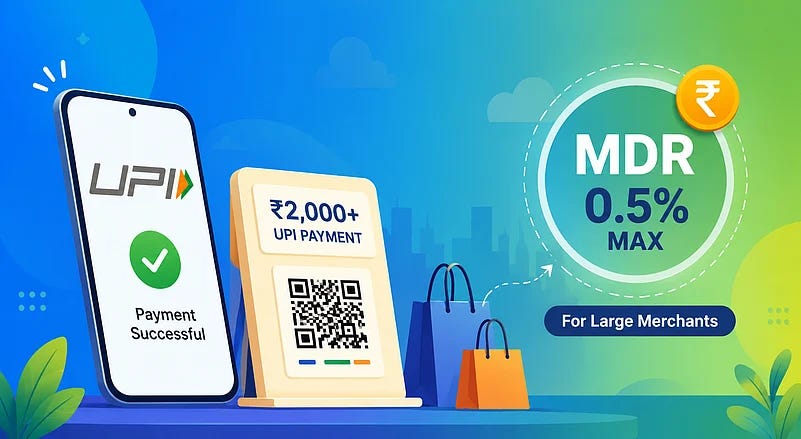
The good news for regular users: the changes won‘t charge you for peer-to-peer transfers or small purchases at local shops. Buying vegetables or milk stays free. The proposed MDR, between 0.25% and 0.50%, targets big corporate and e-commerce merchants with turnovers between ₹1.5 crore and ₹50 crore or higher.
It kicks in on payments over ₹2,000 or ₹3,000. You probably won’t see direct fees on small payments. But a fuel top-up or a big supermarket run over ₹2,000 might get hit. And Amazon or Flipkart could quietly raise prices to cover their costs. As the bill moves forward, the real question is whether MDR on large merchants makes the digital economy sustainable, or whether it‘ll just make things more expensive for everyone.