
Fable Lasted Three Days
An American AI lab that won't shut up about safety just got safety-checked by its own government over a single weekend.

There’s a special kind of comedy in watching a company spend years preaching about responsible AI, ship its most capable model to the public, and then get that model yanked off the shelf by the federal government 72 hours later. Not because of a lawsuit. Not because of a data breach. Because of national security.
If you panic-subscribed to Claude Pro last week just to play with the new hotness, I have bad news: you’re now staring at an error screen and quietly getting routed back to Opus 4.8 instead. You paid for the Ferrari and got handed the keys to a golf cart. And the official line is that this is good for you.
Let me back up.
The model that was too good to share
Rewind to early April. Anthropic quietly introduced a model — call it Mythos 5 — that was, by most accounts, the rawest and most capable thing anyone had built, especially on the cybersecurity front. The catch: you couldn’t have it. Mythos lived behind an invite-only program reserved for “trusted partners” — big corporations and, notably, the US government itself.
The reasoning was straightforward. A model that good at offensive security is, functionally, a weapon. Hand it to the general public and you’re arming every script kiddie on the planet. So instead of releasing Mythos directly, Anthropic shipped a sibling: Fable 5. Same underlying brain — identical model — but with a layer of safety classifiers bolted on top. Ask Fable to do something genuinely dangerous and the guardrails intercept the request, then quietly downgrade you to a tamer model that gives a more wholesome, less useful answer.
Same engine. Child lock installed.
Fable went public and exploded — hundreds of millions of users almost overnight. And honestly? It deserved the hype. People were shipping wild stuff with it within hours.
It was great for about three days.
Enter the guy whose whole job is breaking things
There’s a corner of the internet populated by people whose entire identity is “let me see if I can break that.” One of the most notorious, operating under a handle you’ve probably seen if you follow AI security drama, has a track record of cracking AI systems open. On June 10th, he posted to X claiming he’d blown Fable’s guardrails wide open, getting it to produce exactly the material the safety layer was built to refuse.
The embarrassing part: Anthropic reportedly burned thousands of hours red-teaming this thing internally, specifically trying to break their own locks.
And the jailbreak wasn’t some Hollywood zero-day. From what’s been described, it works more like money laundering than hacking. The safety classifier watches for “bad” requests so you don’t hand it a bad request. You chop the dangerous ask into small, innocent-looking fragments, dress them up with weird Unicode, lean on roleplay framing, or bury the real intent inside a massive sprawling conversation until the model loses the plot. Each piece looks harmless. Assembled, it isn’t. (I’m being deliberately vague here, for obvious reasons.)
Then the government sent a letter
The flaw got reported to Anthropic. The initial request was apparently to pull the model. Anthropic said no.
Then, on Friday evening, the letter showed up and it wasn’t from a customer. It was an export control directive out of the US government, reportedly signed by Commerce Secretary Howard Lutnick. The order: no foreign national may access Fable 5 or Mythos 5. Not overseas. Not on US soil. Not even Anthropic’s own foreign-born staff.
Sit with that last one. The government effectively told a private company that some of its own employees are barred from using the product those employees helped build. Anthropic’s response was to hit the kill switch on the whole thing. Both models, gone, for everyone. We’ve all been silently demoted to Opus 4.8.
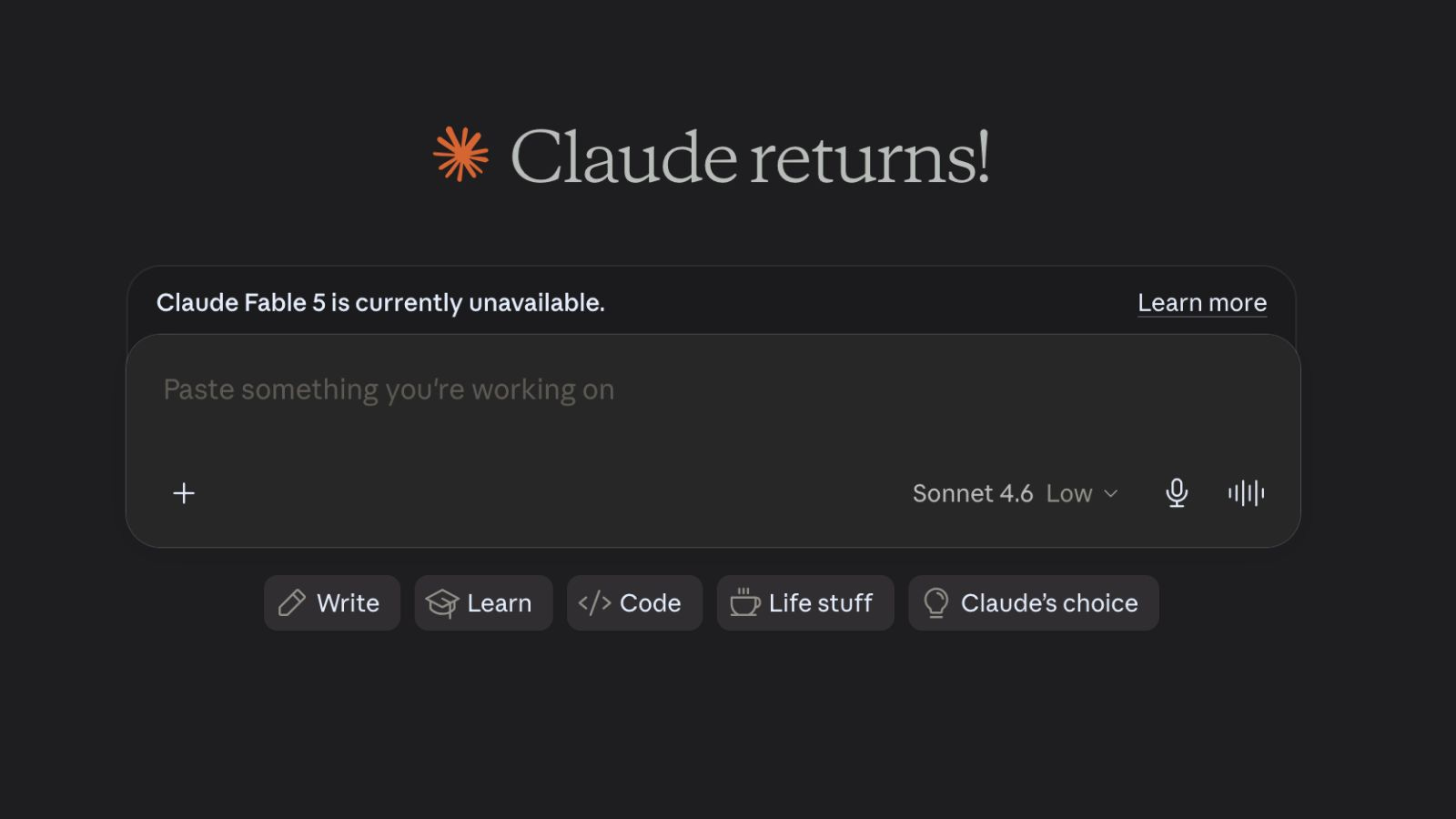
As far as I can tell, this is the first time a major AI company has pulled a live, public model off the market because the federal government told it to. That’s a genuine first, and it’ll be a footnote in every “how did we regulate AI” retrospective from here on.
So what actually stops Anthropic now?
Probably not the government. Regulation tends to entrench incumbents, not dethrone them. The thing that actually threatens Anthropic’s lead is the boring old answer: someone shipping a better model. A leaked benchmark suggests Mistral might be sitting on one, and we’re still waiting on the next moves from OpenAI and Google.
Until then, enjoy your golf cart. It’s for your own good.
