
Apple Just Turned Buying an iPhone Into a Subscription
You'll own nothing!

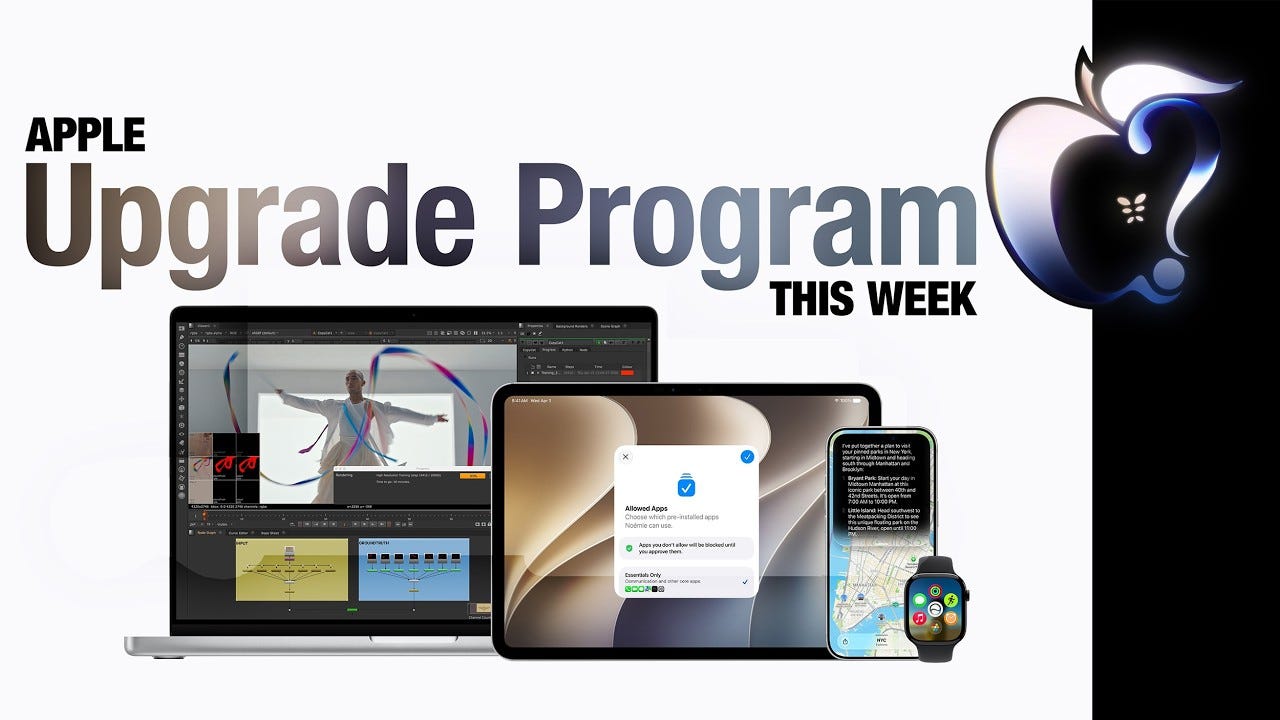
Apple has quietly retired its old iPhone Upgrade Program and replaced it with something broader called Apple Upgrade. This time it isn’t just phones - you can now lease iPhones, MacBooks, and other devices with a monthly payment. And the internet, predictably, has opinions.
Here’s what’s actually going on, and why people are split.
How the New Deal Works
You pick a device and a lease term (12, 24, or 36 months), pay a monthly fee, and at the end you have two choices: send the device back and upgrade to a new one, or buy the one you have.
The buyout math is where it gets interesting. According to Apple’s FAQ, the purchase price is the list price minus your lease payments and any trade-in credit. A couple of real examples:
iPhone 17 Pro Max: $1,199 (₹1,14,624) to buy outright, or $34.99/month (₹3,345) for 24 months ($839.76 / ₹80,281 total) leaving about $433 (₹41,395) to keep it at the end.
16” MacBook Pro: $2,999 (₹2,86,704) outright, or roughly $1,000 (₹95,600) to buy after a 36-month lease.
In other words, treat it like a 2–3 year interest-free loan with a lump sum at the end, and it’s not a bad deal. The catch? You probably can’t just pay it off early and be done.
“You’ll Own Nothing”
The loudest critique is that this quietly converts a one-time purchase into a forever subscription. The goal is “to turn a one-time device purchase into a perpetual monthly revenue stream, while keeping ownership of the asset at the end.”
The psychology is the real hook. Most people won’t want to shell out $433 (₹41,395) for a two-year-old phone when they could roll into a shiny new model for the same monthly payment they’re already used to. Car dealerships figured this out long ago, they never ask “how much can you afford,” they ask “how much do you want to pay every month.” (It’s also worth noting Klarna is reportedly running the financing.)
And Apple wins twice. It collects your payments, then takes the device back and resells it refurbished, sometimes for more than the buyout you declined. Note that a refurbished iPhone 15 Pro listed at $929 (₹88,812) while the trade-in credit for the same model was only $410 (₹39,196).
This aptly resembles the Vimes “Boots” Theory of Economics: the poor pay more over time because they can only afford the cheap, recurring option. A perpetual phone lease fits the pattern uncomfortably well.
The Bottom Line
Apple Upgrade isn’t a scam, and it isn’t a gift. It’s a financing option engineered to be convenient and convenience is exactly what makes recurring payments so sticky.
If you’re disciplined, the smart play is clear: treat it as an interest-free loan, buy the device outright at the end, and ignore the upgrade temptation.
But that discipline is the whole game. For the many people living paycheck to paycheck and Americans hold roughly $1.25 trillion (₹119.5 lakh crore) in credit card debt, the frictionless path is to never buy, never own, and simply keep paying. The context matters too: Apple just crossed a $5 trillion (₹478 lakh crore) market cap. Programs like this are one reason why.
Lease it if the math and lifestyle genuinely fit you. Just go in with your eyes open and know which version of the deal you’re actually signing up for.